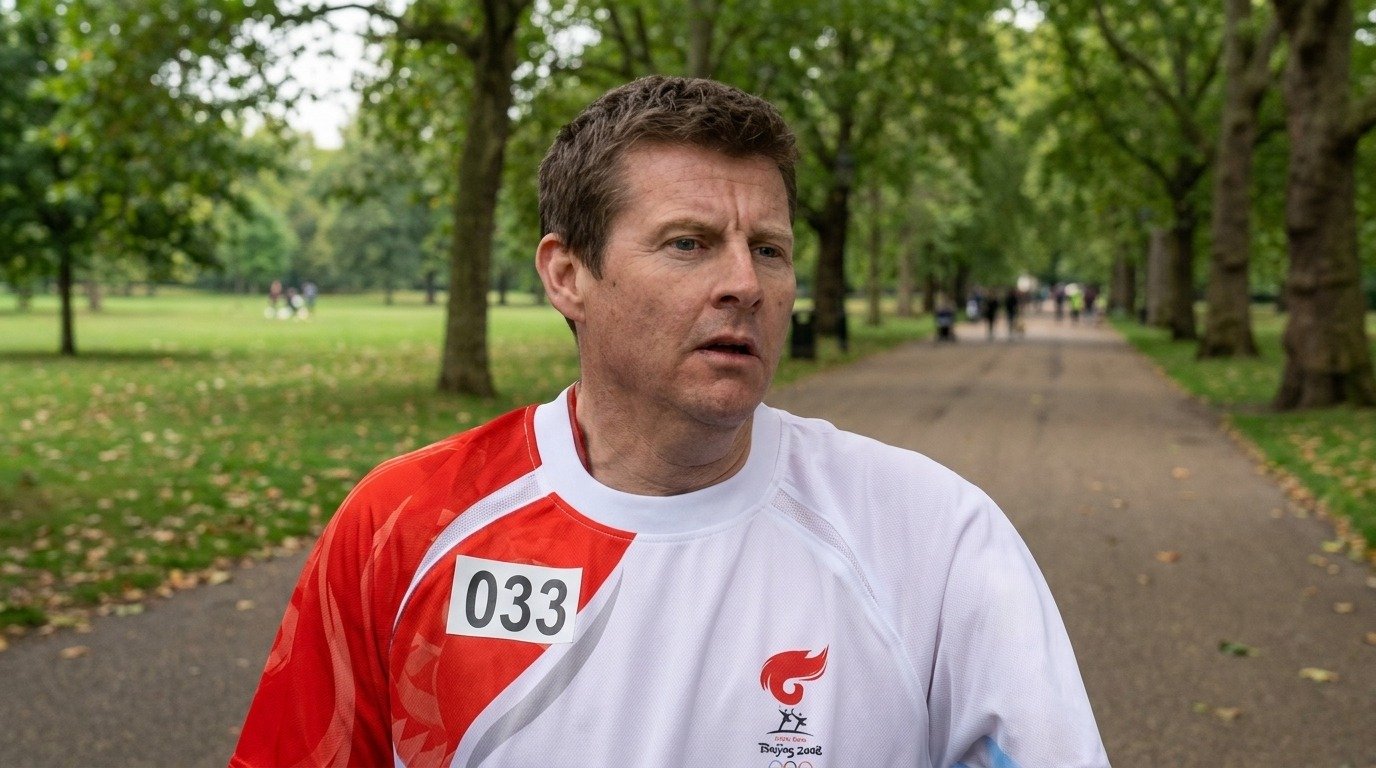
Steve Cram is one of Britain’s greatest middle-distance runners. In the summer of 1985, he broke three world records in just 19 days, a feat that still stands out in athletics history. Today, at 65, he is best known as the BBC’s chief athletics commentator, and 2026 brought him a fresh honor back home: a running track named after him. This Steve Cram biography covers his early life, his racing career, his broadcasting years, and where he stands today.
Quick Facts
| Category | Detail |
| Full name | Stephen Cram |
| Nickname | The Jarrow Arrow |
| Born | 14 October 1960, Gateshead, England |
| Grew up in | Jarrow, Tyne and Wear, England |
| Age (2026) | 65 |
| Height | 6 ft 1 in (185 cm) |
| Sport | Track and field (1,500 m, mile) |
| Club | Jarrow & Hebburn AC |
| Coach | Jimmy Hedley |
| Olympic medal | Silver, 1,500 m, Los Angeles 1984 |
| World title | Gold, 1,500 m, 1983 World Championships |
| Current roles | BBC athletics commentator; President, British Orienteering; Chairman, COCO |
| Honors | MBE (1986), CBE (2015 New Year Honours) |
| Partner | Allison Curbishley |
| Children | Josie and Marcus (with former wife Karen Cram) |
| Estimated net worth | $1–5 million (estimated, as of 2026) |
Early Life in Jarrow
Steve Cram was born on 14 October 1960 in Gateshead, England, though he grew up in the nearby town of Jarrow, in Tyne and Wear. That distinction matters, because his famous nickname, “The Jarrow Arrow,” comes from the town where he was raised and where he first learned to run, not his birthplace. His father, Bill Cram, worked as a police officer, and his mother, Mia, managed the home. He had a younger brother, Kevin, who passed away in 2001.
From an early age, Cram showed a natural talent for running. He joined Jarrow & Hebburn Athletic Club, where coach Jimmy Hedley spotted something other young runners lacked: the ability to finish strong when everyone else was fading. That trait became the signature of his racing style for the next two decades. Cram did not go through a university sports program. Instead, he focused on competitive athletics from his teenage years, making his international debut at the 1978 Commonwealth Games at just 17 years old.
Breaking Through: 1980 to 1983
Cram’s first taste of the Olympics came in 1980. He earned his place on the British team by finishing second to Steve Ovett in the mile at Crystal Palace, then went on to reach the 1,500 m final at the Moscow Olympics, finishing eighth at age 19. It was a modest result, but it put him on the map alongside Britain’s other rising middle-distance stars, Sebastian Coe and Steve Ovett.
The real breakthrough came in 1982. With Coe and Ovett both battling injuries for parts of the season, Cram won 1,500 m gold at the Commonwealth Games in Brisbane and then at the European Championships in Athens, where he broke away from the field with 600 meters left to run. A year later, despite an early-season injury, he recovered in time for the 1983 World Championships in Helsinki. Running a tactically smart race, he sat back through a slow pace and then sped up over the final 200 meters to take the gold medal, beating a strong field that included both Coe and Ovett. That same year, he was voted BBC Sports Personality of the Year.
The Golden Summer of 1985
Cram’s defining season came in 1985, and it is the reason his name still appears in record books today. Within a 19-day stretch that summer, he broke three world records: the 1,500 m, the 2,000 m, and the mile. He became the first man ever to run 1,500 m in under 3 minutes and 30 seconds, clocking 3:29.67. At Bislett Stadium in Oslo, he ran a mile in 3:46.32, a time that stood as the world record for nearly nine years and remains the European record to this day. He also set personal bests that year in the 800 m (1:42.88) and 2,000 m (4:51.39), times that still rank among the best ever produced by a British athlete.
Before that, in 1984, Cram had returned from injury to win the Olympic silver medal in the 1,500 m at the Los Angeles Games, finishing behind training partner and rival Sebastian Coe.
Later Career and Retirement
Cram continued competing at a high level through the late 1980s. At the 1986 Commonwealth Games in Edinburgh, he won gold in both the 800 m and 1,500 m, setting a Commonwealth Games record in the 800 m that still stands. He also won 1,500 m gold and 800 m bronze at the 1986 European Championships in Stuttgart. Persistent injuries affected the final years of his competitive career, and he retired from athletics in 1994. He still holds the British records for the mile and the 2,000 m.
From Track to Microphone: Broadcasting Career
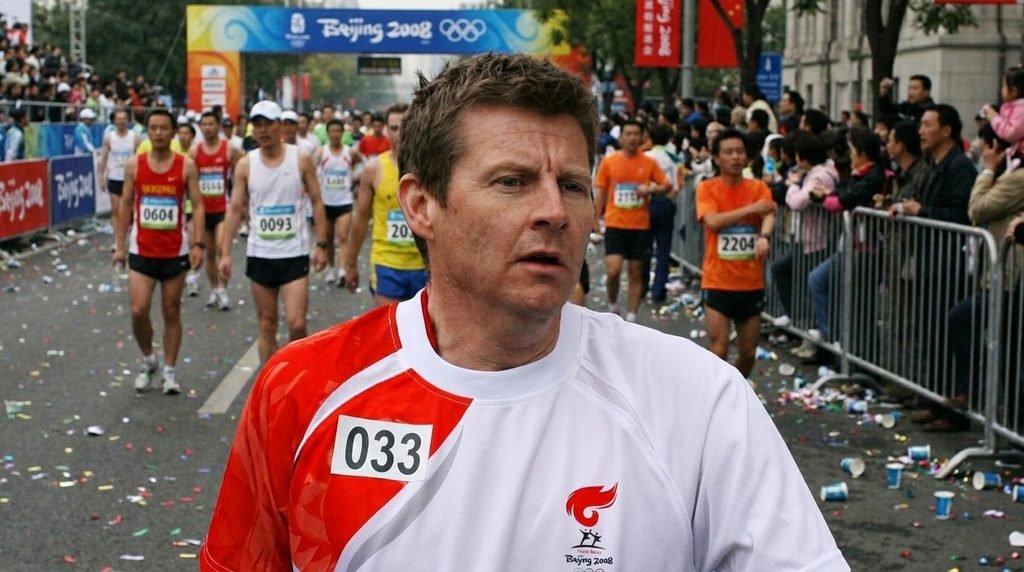
Cram moved into sports broadcasting almost immediately after retiring, working first with Eurosport and then Channel 4 before joining the BBC. He began commentating on athletics for the BBC in 1999 and has since become the corporation’s chief athletics commentator, a role he still holds. He has covered every Summer and Winter Olympics for the BBC since the Sydney Games in 2000, as well as multiple Commonwealth Games starting with Manchester in 2002. He has also worked as the BBC’s lead curling commentator at the Winter Olympics since Vancouver 2010, and has hosted BBC Radio 5 Live programs including 606 and Sunday Sport. Most recently, he was part of the BBC commentary team for the 2024 Paris Olympics.
Beyond commentary, Cram has coached elite British middle-distance runners, including Laura Weightman, Thomas Lancashire, and Ross Murray, and served as an advisor to British Athletics ahead of the 2016 Rio Olympics.
Charity Work and Public Roles
In 2000, Cram co-founded the international children’s charity COCO (Comrades of Children Overseas) with British Army Major Jim Panton, after the pair ran the Bosnia Comrades ultramarathon together in 1998. He remains chairman of COCO, which supports education for children in remote parts of East Africa and has raised well over £1 million for that work.
He has also held several public and honorary positions: Chancellor of the University of Sunderland from 2008 (succeeding filmmaker Lord Puttnam), President of Jarrow & Hebburn Athletics Club from 2009, and, since 2021, President of British Orienteering, a sport he took up as a teenager alongside running. He previously chaired the English Institute of Sport, a network supporting elite British athletes, before stepping down from that role.
For his contributions to sport, Cram was appointed MBE in 1986 and later CBE in the 2015 New Year Honours.
2026 Update: A Track Named in His Honor
Cram’s connection to his home region was formally recognized in March 2026, when South Tyneside Council renamed the running track at Monkton Stadium in his honor, with new signage reading “Monkton Stadium, home of the Steve Cram Track.” Local MP Kate Osborne subsequently tabled a motion in Parliament calling for further recognition of his achievements. In September 2026, Cram also featured in the news for a different reason: he had challenged a BBC local radio team to attempt the fastest half marathon run while presenting a live show, a Guinness World Record bid that was still under review at the time of writing.
Personal Life
Cram was previously married to Karen Cram, with whom he has two children, Josie and Marcus; the couple divorced in 2006. He now lives in Northumberland with former international athlete Allison Curbishley, his partner since the mid-2000s. He is known to be a supporter of Sunderland A.F.C. Public details about his current family life beyond this are limited, and this article avoids speculating on details that have not been confirmed publicly.
How This Was Researched
I researched this biography using Steve Cram’s official Wikipedia profile, verified news coverage from 2026 including local reporting on the Monkton Stadium renaming and the BBC half-marathon story, and official pages from organizations he is affiliated with, including COCO and British Orienteering. Several existing online profiles repeat outdated or conflicting details, particularly around his birthplace, and skip recent 2026 developments entirely. This article cross-checks the Gateshead-versus-Jarrow birthplace confusion against his official Wikipedia record and includes his most recent 2026 news, which most competing biographies do not cover. Where sources disagreed or a detail could not be confirmed, I noted that clearly rather than guessing.
FAQ
Q: Where was Steve Cram born?
A: He was born in Gateshead, England, on 14 October 1960. He grew up in the nearby town of Jarrow, which is why he is nicknamed “The Jarrow Arrow.”
Q: What is Steve Cram famous for?
A: He is famous for breaking three world records (1,500 m, 2,000 m, and mile) within 19 days in the summer of 1985, and for winning 1,500 m gold at the 1983 World Championships and silver at the 1984 Olympics.
Q: Does Steve Cram still hold any records?
A: Yes. He still holds the British national records in the mile and the 2,000 m, decades after setting them.
Q: What does Steve Cram do now?
A: He works as the BBC’s chief athletics commentator, is President of British Orienteering, chairs the children’s charity COCO, and has coached elite British middle-distance runners.
Q: Is Steve Cram married?
A: He was previously married to Karen Cram, with whom he has two children. They divorced in 2006. He now lives with former athlete Allison Curbishley.
Q: What is Steve Cram’s net worth?
A: Various estimates place his net worth at roughly $1–5 million as of 2026, based on his broadcasting career, speaking engagements, and decades in sport. This figure is an estimate and not officially confirmed.
Accuracy Note
This biography is based on publicly available information, including official records, verified news coverage, and organizational websites. If you spot anything outdated or incorrect, please let us know so we can update it.
Written and researched by Muhammad Huzaifa, contributor at Globe News Report.